What Is a Christian Contemplative Movement?
We could say that the Christian contemplative movement has been with us since the beginning. Jesus took time apart, withdrawing into solitude and then returning to live out the fruit of what he saw and heard in that quiet place. He trusted deeply in his relationship with God, and through that trust, power flowed. Healing happened. He confronted injustice. He lived nonviolence, not as an idea, but as presence—as love that relocated those around him in who they are in God.
We could say the movement was alive in the desert, in the mothers and fathers who walked away from a version of Christianity that was becoming too cozy with empire. It was there in Saint Benedict, building a new world within the ruins of the old. It continued in Saint Francis, Dorothy Day, Catherine de Hueck Doherty, Howard Thurman, and Desmond Tutu, who prayed deeply and acted boldly. The movement was there in bell hooks, who remembered the love she experienced in the Black church and combined that with her Buddhist practice, insisting that love must be the foundation of any real social transformation.
All of that, I believe, is part of the Christian contemplative movement.
But for this movement to really offer something to our world—when attention is hijacked by devices, when political crisis is a daily norm, when love seems to have gone missing from the decisions shaping our future—we may need to deepen and extend it. Not by starting from scratch, but by integrating that wisdom and discerning together what this moment calls for.
Maybe it’s time for Christian contemplatives to come together to begin naming and sharing the most vital insights that have been passed down to us.
This movement isn’t a brand or a spiritual spa. It’s also not about escaping the chaos of life for twenty minutes of calm. It’s about praying in and with our problems. It’s about holding the wounds of the world in our hearts as we sit before God—not to flee the pain, but to remain present to it in love. It’s about letting contemplation overflow into our lives and into the world, bringing with it the best tools of social analysis, nonviolence, and a commitment to real change—not as add-ons, but as part of the contemplative path itself.
It’s my conviction that CAC can be a gathering place for contemplatives and communities who are awake to what this moment demands and ready to articulate a shared vision rooted in the wisdom of our traditions.
As Archbishop Desmond Tutu reminded us, any real contemplative experience, when it’s authentic, always sends us back into the heart of human suffering, so we can become God’s partners in transfiguring that suffering and transfiguring the world.
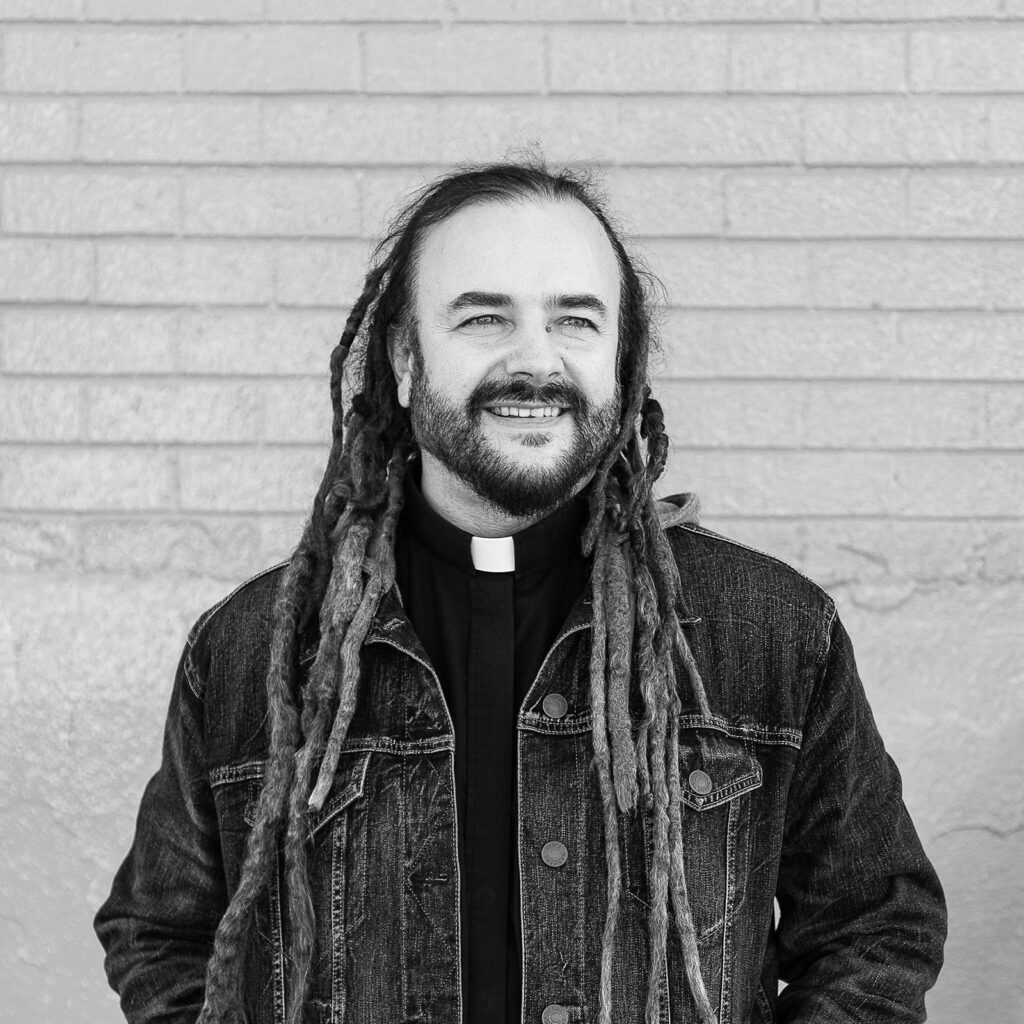
Adam Bucko is an Episcopal priest and teacher of contemplative spirituality. He is the author most recently of Let Your Heartbreak Be Your Guide: Lessons in Engaged Contemplation. He serves as the Director of the Center for Spiritual Imagination and is a vowed member of the new monastic Community of the Incarnation.
The Center for Action and Contemplation’s mission is to introduce Christian contemplative wisdom and practices that support transformation and inspire loving action. In this issue of the Mendicant, we are honored to share with you articles from five members of CAC’s community about what loving action looks like in their lives. Download a PDF of this issue.